




The nonprofit annual report is a unique document. At its most basic, it’s a retrospective summary of your nonprofit organization’s financial activity and accomplishments in a given fiscal year. When done well, it’s also a powerful storytelling and trust-building tool that shows donors the impact of their generosity and where you plan to go next.
Too often, organizations approach their annual report as a quick compliance box to check at the end of the year. But when written with intention and creativity—and when grounded in nonprofit strategic planning—your annual report can become a meaningful extension of your mission that supports your fundraising year-round.
In this article, we break down the most important dos and don’ts of creating a nonprofit annual report that informs and inspires.
What a nonprofit annual report is (and isn’t)
First, it’s important to understand what a nonprofit annual report is.
The annual report summarizes your nonprofit organization’s impact and achievements over the course of a fiscal year. Unlike the federal return that you may be legally obligated to file every year—e.g., the Internal Revenue Service’s Form 990 or Canada Revenue Agency’s T3010—your annual report is a public-facing, voluntary disclosure of your organization’s activities and financial health.
Because it’s public-facing, the annual report serves multiple purposes for a variety of stakeholders. For one thing, it promotes financial transparency—critical not only for maintaining the trust of your current supporters, but for earning the trust of prospective donors who are curious about your mission.
For those prospective donors and other members of the public, your nonprofit annual report may be their first introduction to your organization. This means that the report should provide a clear statement of the mission, vision, and values that guide your work in the communities you serve.
For the board members, donors, and volunteers who make that work possible, the report is first and foremost an opportunity to acknowledge and show thanks, with impact stories demonstrating the real difference their support has made possible and can continue to make moving forward.
Put simply, a well-designed nonprofit annual report is a multipurpose tool that can strengthen your organization’s stewardship, cultivation, and marketing strategy year-round.
The purposes of a nonprofit annual report
As you set out to write and design your annual report, keep in mind that it should:
- Convey your nonprofit mission, vision, and values
- Assess the progress of goals laid out in your nonprofit strategic plan
- Summarize important activities and accomplishments
- Demonstrate financial transparency
- Thank supporters and show impact
- Provide a roadmap for the year to come
The dos and don’ts
Now that you have a clear idea of what the nonprofit annual report is—and what it does—let’s walk through some important dos (and don’ts) to guide your own reporting.
Do: Start with a nonprofit strategic plan
An annual report is more meaningful when it’s shaped by a clear fundraising strategy. When you’ve already laid the important groundwork of intentional nonprofit strategic planning, you have the tools to write an annual report that reflects mission-aligned strategy and that provides tangible results of your organizational goals and priorities. It’s one thing to say, Look what we’ve accomplished this year. It’s even more powerful to say, Our priority this year was to accomplish X goal, we pursued Y fundraising strategy to achieve it, and we’ve seen Z successful outcome as a result.
Before you draft your report, ask yourself:
- What goals are we working toward as an organization?
- What metrics and reports are we using to measure progress and impact?
- What are the outcomes that matter most to our donors and stakeholders?
- How does this year’s progress fit into our longer-term strategy?
Your nonprofit annual report begins with clear goals and a cohesive fundraising plan.
Download Data-Informed Planning for Fundraising Success and get expert guidance for creating a nonprofit strategic plan that is actionable and mission-aligned.

When your annual report aligns with your nonprofit strategic plan, it tells a cohesive story of intention, progress, and impact.
Don’t: Approach your nonprofit annual report as a one-off marketing task or something that can be thrown together at the last minute. Without a clear strategic direction, reports lack focus and mean much less to the people reading them.
Do: Lead with mission, impact, and outcomes
Your mission and the communities you serve are at the heart of your nonprofit organization—so they should be central to your nonprofit annual report, too.
Particularly for those readers who might be new to your nonprofit, establishing your mission and vision at the outset will provide a clear frame for the outcomes you’ve achieved and the impact they’ve had. And when you tie specific activities or achievements back to your guiding mission, the annual report becomes an expression of your ongoing commitment to alignment and accountability.
Don’t: Simply list all of your activities and assume readers will understand their relationship to your mission and impact on your communities. Clearly explain what each outcome has contributed to your nonprofit’s long-term vision and growth.
Do: Tell a clear story with data
The data you include in your nonprofit annual report is only as compelling as the story you tell with it. Rather than tabulate every program update or statistic, the annual report should highlight key metrics and milestones that shape a meaningful narrative of the year. Your readers don’t want to know every detail of the work you’ve done; they want to know why it matters.
Consider these storytelling tips:
- Develop a clear narrative arc for the year: where did you begin, what did you accomplish, and what will you do moving forward?
- Select key data points that illustrate areas of success, progress, and impact.
- Highlight specific impact stories that add emotional resonance to the data.
- Always bring the story back to your mission.
Don’t: Treat your annual report like a data dump. Providing too much information will overwhelm your readers and distract from your meaning, message, and mission.
Do: Put your supporters front and center
Because the annual report is essentially a summary of your organization’s activities and impact, it can be easy to frame things in terms of what you did. But the story you’re telling is just as much about thanking your donors for what they have made possible.
Upgrade your storytelling with the power of video.
What if your donors could see, feel, and hear the impact of their generosity? DP Video integrates directly with DonorPerfect, making it easy to thank supporters and illustrate impact with a personal touch.

Donor-centric storytelling allows your supporters to see and feel the impact they have as partners in your mission. It also makes them feel appreciated, which ultimately helps to build trust and deepen your most important relationships.
As you write your nonprofit annual report, be sure to highlight:
- Major, recurring, and one-time donors
- Volunteers and participants
- Event attendees
- Corporate sponsors and community partners
When you shift the focus from what your organization achieved to what you and your supporters achieved together, you emphasize the shared values and commitment that keep your mission moving forward.
Don’t: Make it all about the organization. Instead, focus on how the commitment and support of your donors shaped successful outcomes and meaningful impact.
Do: Share financials transparently—and strategically
Being open about your nonprofit organization’s operations and financial health is essential to sustaining a culture of accountability and maintaining donor trust. As with your data, however, it’s important to present your financials in the right way.
The nonprofit annual report is not the place to include full financial statements or federal compliance forms, which may be too complex for readers to understand—or too dry for them to care about. Instead, focus on presenting key figures with explanation and context.
Your nonprofit annual report should include:
- High-level financial summaries (operating budget, fundraising revenue, program expenses)
- Simple and easy-to-understand visuals (tables, graphs, infographics)
- Clear, narrative explanations of how funds were used to achieve specific outcomes
The financial health of your nonprofit organization relies on fundraising and accounting systems that work in tandem. Learn how an integrated accounting solution can improve operational efficiency and grow your fundraising in this blog: Fundraising and Finance: A Guide to Nonprofit Accounting Software.

Don’t: Include detailed financial reports or federal forms like the Form 990 or T3010. Save those for the appendix, or include a link where readers can view them online.
Do: Make it forward-looking
While the nonprofit annual report is primarily a retrospective document, it should also give your readers an idea of what’s next. Where are you headed now, and how will you build on the activities and achievements of the past year to get there?
Include future-focused sections that show donors:
- Your goals and objectives for the coming year
- How future plans will fit into your nonprofit’s long-term priorities
- Lessons learned that will shape ongoing strategy
- Why their continued support matters
Data insights for a clear path forward
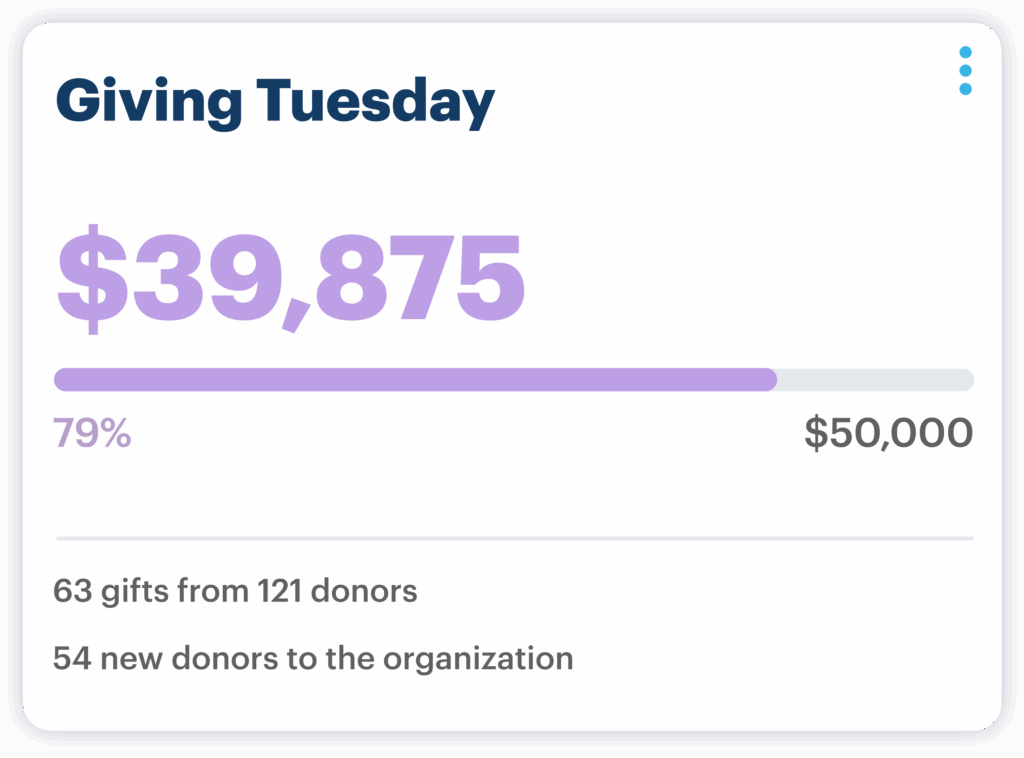
DonorPerfect’s at-a-glance donor insights, automated reports, and custom dashboards help you prioritize the right donors and stay on track with your fundraising goals.
Remember, each annual report reflects just one piece of your nonprofit organization’s larger, sustained vision. When you ground the report in intentional nonprofit strategic planning, your donors better understand their part in an ongoing mission and feel inspired to stay involved.
Don’t: Only focus on what happened. Devote attention to where you plan to go next and how your donors can help you get there.
Do: Design and distribute for deeper engagement
Because the annual report is a public-facing and multipurpose document, it should be visually appealing, easy to read, and accessible. If you present readers with one long wall of text, they’re likely to lose interest. Instead, get creative with design and consider non-traditional formats that might be more engaging.
Follow these design best practices:
- Use clear headings, visuals, and white space to guide readers’ attention.
- Prioritize digital formats that promote shareability and accessibility.
- Emphasize key takeaways, quotes, and statistics with color, bold text, and graphics.
- Include photos and videos of program highlights (with permission).
- Consider web-based platforms that enable visual storytelling and interactivity.
- Make sure it’s mobile-friendly.
Additionally, be strategic about how and where you distribute your report. When used effectively, the annual report isn’t just something you publish and forget, but a fundraising tool that informs and engages stakeholders year-round.
Promote your nonprofit annual report by:
- Sharing via email, social media, and on your website
- Highlighting it in donor meetings and board discussions
- Repurposing impact stories and statistics for fundraising and marketing
The look and feel of your nonprofit annual report can distract from the story you’re trying to tell. But when you’re intentional about design and distribution, the report can strengthen your overall fundraising strategy and inspire audiences to engage more deeply with your mission.
Don’t: Treat the design and distribution of your annual report as an afterthought. A visually compelling report can be used not only to inform and inspire donors, but to connect your mission to a wider audience.
The key to writing an effective nonprofit annual report is starting with a clear, data-informed fundraising plan and clean systems to support it. Download How to Use Data to Manage Your Nonprofit and get practical tips for tracking financial performance, automating workflows, and visualizing impact in your nonprofit CRM.