



A Guide To Outcome-Based Online Fundraising
As donor giving trends have evolved, online donation forms have become more sophisticated. Today, nonprofits can create branded giving pages, accept multiple payment methods, encourage automated recurring giving, and connect online donor data directly to their fundraising CRM.
For many donors, however, the giving experience still comes down to a familiar question: How much would you like to give?
Suggested donation amounts can help guide donors toward a gift size that makes sense for them—particularly ask amounts that are personalized and data-informed. But a dollar amount alone can also feel abstract. What, a donor might wonder, would my gift of $25 or $50 or $100 actually achieve?
Impact giving for nonprofits addresses this question by reframing online giving altogether. Rather than ask donors to think first about how much they want to give, impact giving invites them to start by choosing the outcome their generosity would make possible.
If you’re looking to strengthen your online fundraising, keep reading to learn:
- What impact giving is and why it matters for nonprofits
- How impact giving supports a modern online giving experience
- Steps for creating an effective impact giving strategy
- Integrated online donation forms that support impact giving
While impact giving is still a relatively recent trend in online fundraising for nonprofits, its growing popularity indicates a shift toward greater transparency and deeper connection—for both nonprofits and the donors who support them.
What is impact giving for nonprofits?
Impact giving is an approach to nonprofit online fundraising that allows donors to choose a specific outcome their gift can help make possible. Supported by conversion-driven donation forms like Givecloud, it provides a modern alternative to traditional online giving.
Instead of presenting only dollar amounts, nonprofits can present tangible giving options that connect a donor’s contribution to a real-world result. While the donor is still ultimately making a monetary contribution, the experience feels different because the donation is framed around meaning rather than money.
Effective impact giving options are:
- Specific enough to feel tangible
- Simple enough to understand quickly
- Rooted in real program needs
- Connected to outcomes donors care about
- Written in human, mission-centered language
One term, two ways
The term “impact giving” is sometimes used in modern philanthropy to describe collective giving, giving circles, or groups of donors who pool funds and make giving decisions together.
In online giving for nonprofits, impact giving means something different: an individual donor experience where supporters select tangible outcomes on a nonprofit’s donation page.
For fundraisers, this second definition has important implications. It changes how nonprofits think about donation pages, campaign messaging, donor stewardship, and online fundraising strategy. Instead of treating the donation form as the end of a campaign, impact giving for nonprofits turns it into a key storytelling moment.
If the traditional giving experience is centered around how much a donor is willing to contribute, impact giving reframes donor generosity through a different question: What will my gift actually do?
When nonprofits can answer that question directly on their online donation page, they create a more compelling online giving experience. Donors don’t have to guess whether their contribution matters; they can see a clear connection between their support and the mission outcomes they care about.
Impact giving vs. suggested donation amounts
Impact giving doesn’t have to replace suggested donation amounts. In fact, suggested amounts can still play an important role in an effective online donation form.
When used strategically, impact giving reinforces those amounts with meaningful context.
A standard donation form may ask someone to give $35, $75, $150, or $500. But an impact giving experience might pair those amounts with specific outcomes:
- Provide a hygiene kit for one neighbor in need – $35
- Help feed a family for one week – $75
- Supply a classroom with learning materials for a month – $150
- Supply emergency assistance for one household – $500
Suggest smarter giving amounts using donor data
Givecloud online donation forms sync directly with DonorPerfect’s donor management system, enabling nonprofits to present personalized ask amounts based on donor giving history and capacity.
Watch our on-demand webinar to learn more about Givecloud’s modern form features: Givecloud 101: Online Donation Forms for Nonprofits
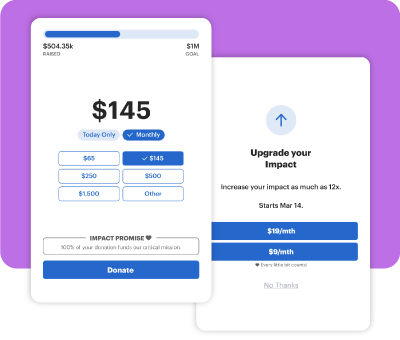
Presenting a donor’s options in this way puts the emphasis on transformation over transaction. Rather than asking, “What amount should I give?,” the donor can consider, “What difference do I want to help make?”
That shift can be especially powerful in online fundraising, where nonprofits have only a few moments to capture a donor’s attention and inspire action. A clear impact option can make the giving decision easier to understand, visualize, and feel good about quickly.
Why impact giving matters for online fundraising
Today’s supporters expect the digital giving experience to be simple, intuitive, mobile-friendly, and connected to the causes they care about. Impact giving fits that expectation because it helps nonprofits communicate value at the very moment a donor is deciding whether to give.
Here are four reasons impact giving matters for modern nonprofit fundraising:
1) It promotes donor understanding and confidence
A donor shouldn’t have to guess what their contribution means or how it will help your mission.
When a donation page lists only dollar amounts, donors may not immediately understand how those amounts connect to the work of your organization—and that uncertainty can lead to hesitancy at checkout.
Impact giving, on the other hand, provides a clearer reason to choose one option over another. Instead of wondering whether $100 would be meaningful, a donor can see that $100 may help provide emergency supplies or sponsor a program participant. That clarity makes for greater confidence and, ultimately, less friction in the decision-making process.
Optimize your online donation forms
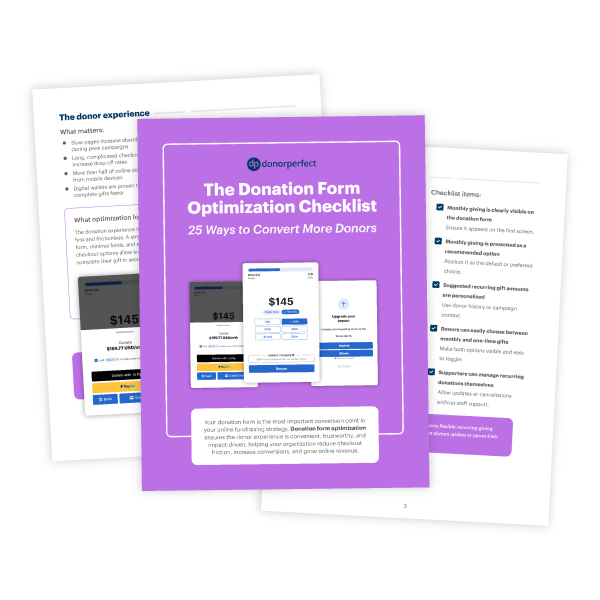
Looking for more ways to improve your donation form performance? Download our free Donation Form Optimization Checklist for 25 simple strategies you can use to reduce friction in your forms and increase donor generosity.
2) It deepens connection to your mission
Today’s donors are particularly motivated by a sense of connection to the causes they care about and desire to make a difference. They want to help solve a problem, support a community, or create a better future.
Impact giving for nonprofits helps to keep that motivation at the center of the donation experience.
When a donor selects “Fund one night of shelter and a warm meal,” they’re imagining a person or family who might benefit. A donor who chooses “Plant 25 trees” can picture the specific environmental outcome. That emotional connection is the basis of impact giving.
3) It makes recurring giving more tangible
Recurring giving provides reliable, sustained revenue for your nonprofit—making it one of the most valuable forms of support you can build. But monthly giving can sometimes feel abstract if donors don’t understand what their ongoing gift makes possible.
Impact giving can help make recurring donations feel more concrete.
An impact-first recurring giving could look like:
- Cover books and supplies for one student for a year – $10/month
- Help provide weekly lunch for one student – $25/month
- Fund access to a weekly after-school mentorship program – $50/month
- Create a learning technology fund for one classroom – $100/month
When donors can see the impact of a monthly donation, it’s easier to say yes to recurring giving.
Pro tip: Combine impact giving with gift automation to make recurring giving as seamless as possible—for your donors and for your organization.
Learn how Givecloud’s self-service donor portal allows donors to manage their support while saving your team valuable time.
4) It creates stronger follow-up opportunities
Impact giving shouldn’t end on the donation confirmation page.
When a donor chooses a specific outcome, your nonprofit has a natural follow-up opportunity. Your thank-you message, receipt, welcome email series, and future appeals can all reinforce the specific outcome the donor cared about.
Example: “Thank you for providing groceries for families in our community. Because of donors like you, more neighbors can access nutritious food this month.”
Create interest-based segments for deeper donor impact
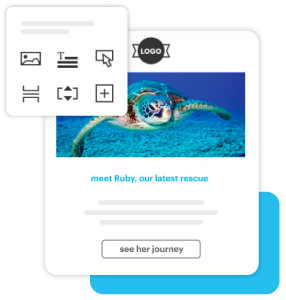
Impact giving provides nonprofits with valuable information about the programs donors care about most. With Constant Contact, nonprofits can easily segment donor groups based on past impact selections to create more targeted appeals in the future.
Even when gifts aren’t restricted to the exact item selected, you can still report back in terms of broader program impact. The key is to remind donors that their generosity mattered—and show them how.
How to create an impact giving strategy
An effective impact giving experience is about much more than the descriptions you include on your donation page. It should involve thoughtful planning, realistic gift-to-impact mapping, and strong follow-up.
Here are five steps to help your nonprofit create an impact giving strategy that inspires generosity.
1) Start with tangible outcomes
Begin by identifying straightforward outcomes donors already understand or can easily picture.
Strong impact giving options might include:
- Provide meals for one family
- Sponsor one student
- Fund one night of shelter
- Cover transportation to one appointment
- Supply one classroom
- Provide emergency care for one rescued animal
Try to avoid language that’s vague or institutional. For example, “Support program operations” may be technically accurate, but for a donor, it’s not as emotionally clear as “Help one family access emergency assistance.”
2) Keep options simple
Too many choices can overwhelm a donor, leading to decision fatigue and even inaction. A strong impact giving experience only needs a few options.
A simple structure might include:
- Entry-level impact option
- Mid-level impact option
- Higher-impact option
- Monthly giving option
- Custom amount
The goal is to help donors make a confident decision quickly. By limiting the number of choices available to donors, you minimize friction in the giving process.
Pro tip: Impact giving can support your direct-mail campaigns, too. Consider adding impact-first language to the suggested donation amounts on your reply devices.
3) Use human-first language
Impact giving works best when the language is clear, specific, and human-centric.
For example, compare the following options:
| Instead of this… | Try this |
| Support educational enrichment | Provide school supplies for one student |
| Fund nutritional assistance | Feed one family for a week |
| Expand access to critical services | Help one neighbor get the care they need |
Simplifying your language doesn’t mean simplifying your mission. It means translating your mission into relational terms your donors can immediately connect with.
4) Be transparent about gift use
Impact giving is effective in part because it builds trust with donors—but that trust depends on transparency around how gifts will be used.
If a gift will be restricted to a specific program or purpose, say so. If the gift will support programs like the one described or help meet the organization’s most urgent needs, say that, too.
A simple note can help maintain donor trust: “Your gift will support programs like this and help us meet the most urgent needs of the people we serve.”
This allows nonprofits to use impact-based messaging while staying honest about how funds are managed.
5) Reinforce impact in your follow-up
Naturally, impact giving creates an expectation that a specific outcome will be achieved. Once donors choose an outcome, continue to tell that impact story in your follow-up messaging.
You can reinforce donor impact through:
- Confirmation page messaging
- Thank-you emails
- Donation receipts
- Campaign updates
- Annual reports
- Impact newsletters
- Future appeals
The more consistently you connect generosity to outcomes, the more likely donors are to understand the value of their support over time.
How modern online donation forms can support impact giving
Impact giving is most successful when your online donation forms and donor management system work hand-in-hand to support the full donor journey.
A nonprofit can write compelling impact options, but if the donation form is slow, difficult to use on mobile, or disconnected from donor data, the experience can fall short. Modern online donation forms should make it easy for donors to understand their options, complete their gifts, and stay connected after they give.
Givecloud helps nonprofits deliver engaging online giving experiences that inspire generosity and convert visitors to long-term supporters. On the other hand, DonorPerfect’s best-in-class nonprofit fundraising software makes it easier to track donor information, understand giving behavior, and steward relationships over time.
Together, Givecloud and DonorPerfect support a complete impact giving journey:
- Present impact through a compelling online giving experience
- Process gifts through a frictionless donation flow
- Sync donor data to your fundraising CRM
- Track campaign performance using custom reports and dashboards
- Follow up with donors with personalized, mission-centered messaging
The full journey matters. While impact giving supports a more connected donor experience, it also provides nonprofits with valuable insight into what donors care about and the types of messaging they respond to most—ultimately helping to shape future engagement and build more lasting, meaningful donor connections.
Frequently Asked Questions
1. What is impact giving for nonprofits?
2. Why is impact giving important for nonprofits?
3. What is an example of impact giving?
4. Does impact giving replace suggested donation amounts?
5. Can impact giving be used for monthly donations?
6. What types of nonprofits can use impact giving?
7. How do online fundraising platforms support impact giving?
Discover integrated impact giving for nonprofits
Request a demo of Givecloud + DonorPerfect today.