

There is a clear gap between fundraising strategy and the systems that support it.
Nonprofit leaders have spent years navigating economic uncertainty, changing donor expectations, staffing shortages, and increasing demands. Through it all, they’ve learned what works. But the challenge is execution, not strategy.
According to a recent study conducted by G2, many organizations are struggling to execute those strategies consistently—not because they lack expertise, but because they’re operating with limited capacity and disconnected systems.
The nonprofit resilience gap
The research shows a disconnect between knowing what drives fundraising success and having the operational capacity to execute it consistently.
Among respondents:
- 89% prioritize donor retention and renewal
- 91% emphasize personalized cultivation and stewardship
- 93% provide immediate acknowledgment followed by ongoing stewardship
- 77% tailor stewardship based on donor segment or gift level
But only 9% use standardized ongoing touchpoints.
Many organizations struggle to deliver these experiences consistently because they are working with limited staff capacity, fragmented systems, and manual processes that consume valuable time.
Standardize your donor stewardship strategy with fundraising automation.
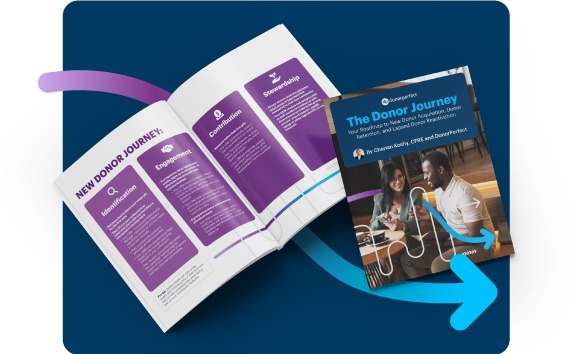
DonorPerfect includes built-in donor journey mapping that automatically guides supporters through acquisition, retention, and reactivation as your relationships progress:
- New Donor Journey – Guide prospects from expressing interest in your mission through making and being thanked for their first gift.
- Donor Retention Journey – Build relationships, honor your loyal supporters and stay up-to-date with your donors’ philanthropic goals.
- Lapsed Donor Journey – Learn why donors stop giving, and reconnect with those who are interested in remaining part of your community.
The barriers between fundraising strategy and fundraising success
1. Integration
Most nonprofits use some form of donor management software.
But disconnected tools are creating more work:
- 77% of organizations report having donor management software, but only 16% say their technology stack is mostly integrated
- 57% still process donations through hybrid workflows that require manual cleanup and intervention
The result is a fundraising operation that appears connected on the surface but depends on staff to bridge the gaps behind the scenes. As organizations grow, these inefficiencies become harder to manage. More donors, campaigns, and communication channels create more opportunities for data silos, duplicate records, and manual handoffs.
2. Fragmentation
It’s not uncommon for nonprofits to have lean development teams.
But manual processes tend to shrink staff capacity:
- 62% operate with very small teams, facing clear capacity constraints
- 75% report that manual processes lead to errors, duplicate records, or missed follow-up opportunities
For development professionals, this creates a frustrating cycle. Time that could be spent cultivating donors is instead spent reconciling reports, correcting records, and searching for information across multiple systems.
3. Automation
Most nonprofits don’t need more data.
They need more insight:
- 93% can access basic reports but struggle to turn information into action
- 74% said they can access fundraising data, but still need to manually clean and interpret it before it becomes useful
- 75% said they want more proactive alerts and actionable insights from their fundraising software
Fundraisers want systems that help them identify which donors need attention, which supporters may be at risk of lapsing, and where the next opportunity for engagement exists—all without requiring hours of manual analysis.
At the same time, change can feel risky. More than half of respondents said cost and transition concerns keep them anchored to their current systems, even when they recognize room for improvement.
The implications of integration, fragmentation, and automation problems
The nonprofit sector has already reached a broad consensus on what effective donor engagement looks like.
What’s holding them back is the operational reality of delivering those experiences at scale—and reducing the friction that prevents staff from doing the relationship-building work they already know matters most.
Lean fundraising teams carry operational burden
When teams are stretched thin, even simple administrative tasks can create significant barriers to effective fundraising.
The G2 study found that 62% of nonprofit organizations operate with very small teams facing clear capacity constraints, and only 2% reported having no meaningful staffing limitations.
Respondents reported spending valuable time on:
- Manual data cleanup
- Duplicate record management
- Donation reconciliation
- Reporting preparation
- Cross-platform data transfers
As a result, 75% said manual processes contribute to errors, duplicate records, or missed donor follow-up opportunities. More than 60% acknowledged that process gaps have already led to delayed or missed donor outreach.
Keep donor data organized and fundraising staff aligned without manual processes.
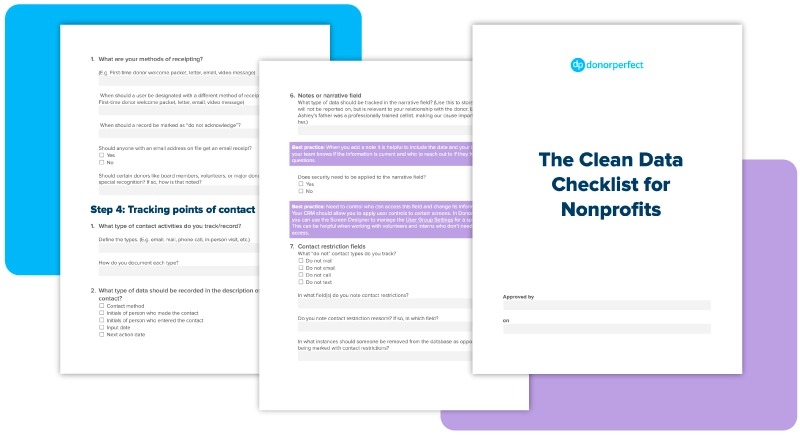
Audit your donor database with advice from fundraising experts. The Clean Data Checklist is a customizable resource that helps your team follow best practices, standardize coding, and eliminate duplication for consistent donor engagement workflows.
In nonprofit development, insights > data
The G2 study found that access to donor data isn’t the primary issue.
When running reports and accessing fundraising data, 74% said they still need to manually analyze, clean, and interpret that information before it becomes actionable.
Similarly, while organizations collect the data needed to identify gift upgrade opportunities and donors at risk of lapsing, 98% still rely primarily on intuition, relationship knowledge, or manual review to make those decisions.
Turn data into action without creating additional work for your busy team.
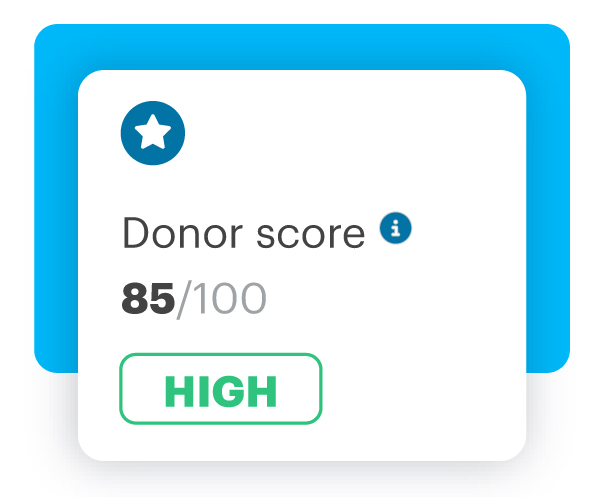
DonorPerfect includes a built-in metric called the Donor Score—a real-time metric ranging from 0–100 that reflects donor engagement and giving history.
Within fundraising software, true integration is rare
One of the G2 study’s most revealing findings is that most nonprofits aren’t lacking a central donor database—they’re lacking connectivity between fundraising tools.
In fact, 77% of organizations already use some form of donor management software as their primary system of record, but only 16% of respondents described their technology stack as mostly integrated. Nearly half reported significant manual syncing between platforms.
This fragmentation can create hidden costs:
- Staff spend more time moving information than acting on it
- Reporting requires manual consolidation
- Stewardship workflows become inconsistent
- Critical donor insights remain trapped in separate systems
As a result, many organizations rely on a combination of fundraising platforms, event systems, communication tools, spreadsheets, and manual workarounds to bridge gaps between systems.
Support the full donor lifecycle without moving data between tools.
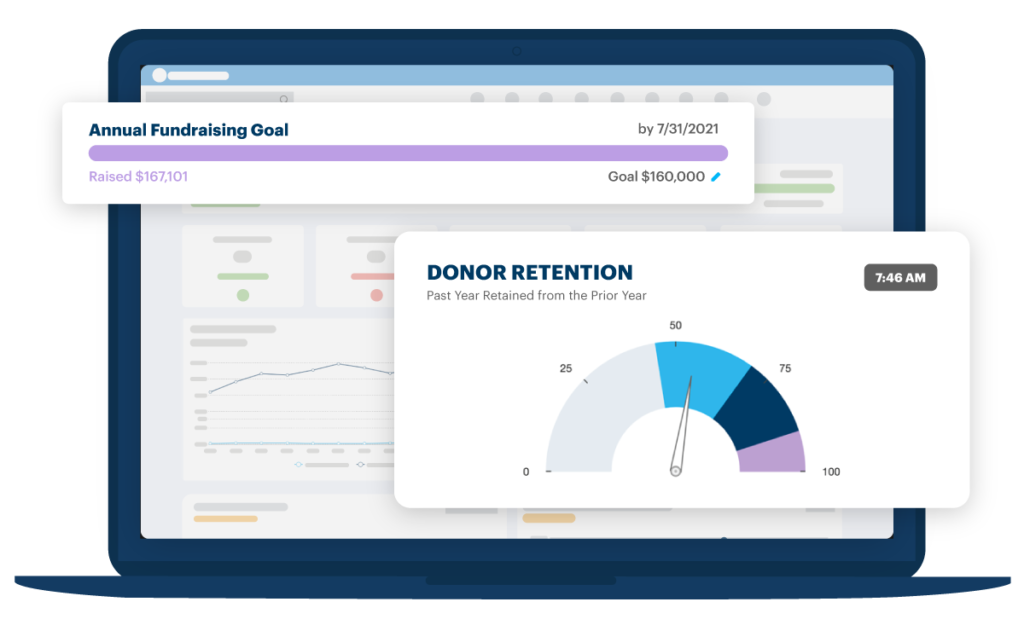
Look for an integrated fundraising software like DonorPerfect that combines donor management software, online donation forms, donation processing, nonprofit email marketing, fundraising automation, reporting, events, auctions, and partner integrations in one connected platform.
Resilience is built through better systems
The findings reinforce an important lesson for nonprofit leaders evaluating fundraising software: success is about creating systems that help your team execute proven strategies more consistently.
When evaluating fundraising software, organizations should look beyond basic donor management capabilities and ask:
- Will this reduce manual work?
- Can it support personalized stewardship at scale?
- Does it integrate with the tools we already use?
- Will it help us act on donor insights more quickly?
- Can it grow with our organization over time?
As nonprofit teams continue to face increasing expectations and limited resources, resilience will depend on fundraising software that increases your staff’s productivity while guiding them on what to do next.
Ready to evaluate whether your current systems are helping—or hindering—your organization’s growth? Download our fundraising software checklist to assess your current system, evaluate software vendors, and choose a system that grows with your mission.
Download your free checklist:
How to Choose the Best Nonprofit CRM for Your Needs