




An inside look at Neurogiving: The Science of Donor Decision-Making
Contributed by Cherian Koshy, nonprofit speaker and strategist, Author of Neurogiving: The Science of Donor Decision-Making
We’ve all seen it.
A donor gives once… maybe twice… and then disappears.
Not because they stopped caring.
Not because they were unhappy.
But because the moment of generosity slipped away before your organization could reinforce it.
In neuroscience, this is called generosity decay, the natural drop-off in motivation that happens in the minutes, hours, and days after someone makes a decision to give. It’s not about intention. It’s not about loyalty. It’s biology.
And the good news? You can counteract it.
In my book, Neurogiving: The Science of Donor Decision-Making, I talk about the powerful role of memory, emotion, and identity in donor behavior. But one insight has been especially important for nonprofit CRM users:
Your nonprofit CRM is not a database. It’s a neurological intervention.
If that sounds dramatic, let me explain.
Giving is a peak emotional state, and peaks fade fast
When someone clicks “Donate,” their brain lights up in three key regions:
- the reward circuit (dopamine → “this feels good”),
- the empathy circuit (insula → “this matters to me”), and
- the identity circuit (medial prefrontal cortex → “this is who I am”).
But these circuits cool down quickly, research shows, within days. This means the first 24 hours after a gift are biologically critical.
It is the period when donors are most open to:
✔ Hearing from you
✔ Saying yes again
✔ Forming a long-term memory that their generosity means something
Yet this is also where most nonprofits unintentionally introduce decision friction:
- Slow acknowledgments
- Manual follow-ups
- Inconsistent thank-you processes
- Delayed impact stories
- Missing personalization
Every tiny delay becomes a “generosity tax,” and the brain does what it always does under friction: it forgets.
The antidote: Automated reinforcement while the brain is still warm
This is where nonprofit CRM users have a significant advantage: automation.
In Neurogiving, I talk about the “Memory Window,” the short period when the donor’s brain is actively encoding the giving experience. A nonprofit CRM like DonorPerfect can help you operate inside this window by automating three neurological reinforcements:
1. Reinforce identity
Your thank-you message should immediately affirm who the donor is, not what they did.
Instead of: “Thank you for your donation.”
Try: “You’re the kind of person who shows up when it matters most.”
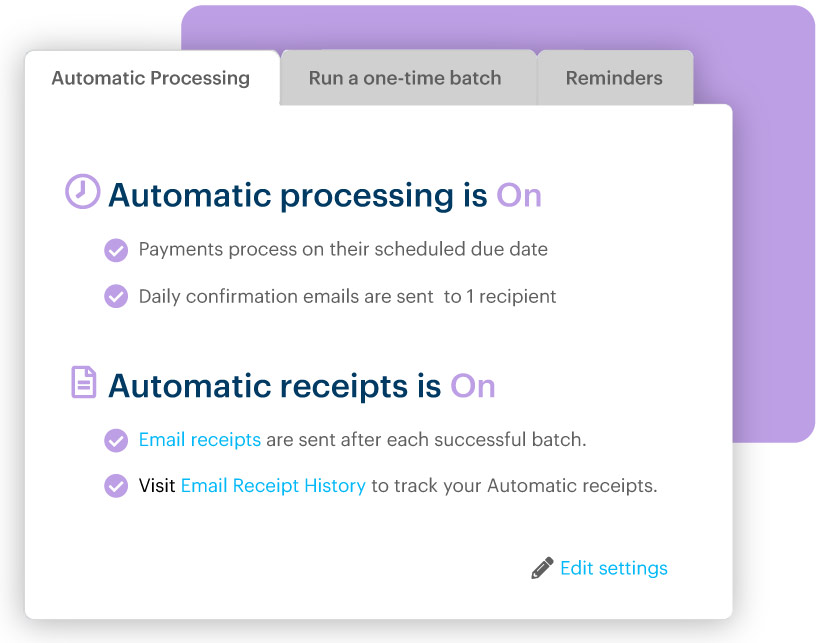
For example, DonorPerfect makes this effortless with:
- Automatic donation receipts and thank yous that you can customize
- Email template personalization with text, numbers, dates, or formulas
2. Reinforce emotion
Emotion fuels generosity, but emotion fades quickly unless it’s repeated.
Set up a workflow that sends a “micro-story” within 24 hours:
- A 2–3 sentence update
- A photo
- A real example of impact
It doesn’t need to be polished. It needs to be felt.
3. Reinforce continuity
Neuroscience shows that once someone has made a prosocial choice, they are far more likely to make the next one if the pathway is easy and familiar.
Use automations to:
- Invite them to a welcome journey
- Tag them based on identity or affinity
- Schedule the next touch without manual work
You’re not “asking again.”
You’re extending the story that their brain already started writing.
A real-world example from Neurogiving
In one study I cite, donors who received immediate, identity-based gratitude became recurring givers at rates 2–3x higher than those who received neutral, transactional acknowledgment.
Not because the message was clever.
Not because the ask was different.
But because the communication aligned with the donor’s neurological state.
This is the future of fundraising, and nonprofit CRMs like DonorPerfect make it possible for any size nonprofit.
Your nonprofit CRM is a memory system for generosity
In Neurogiving, I say something that tends to surprise people:
Fundraising is not a revenue problem. It’s a memory problem.
Donors don’t stop giving because they lost generosity.
They stop giving because the feeling faded before an organization reinforced it.
That is something your team can control.
And it starts with treating your nonprofit CRM as more than software.
It is:
- Your donor’s memory keeper
- Your generosity accelerator
- Your identity amplifier
When you design your workflows for the brain, not just for the database, you reduce friction, strengthen trust, and keep generosity alive longer.
Ready to go deeper?
If this idea resonates, you’ll find much more in Neurogiving: The Science of Donor Decision-Making, a guide to designing fundraising experiences that work with the donor brain, not against it. You’ll also discover more in the webinars and e-books on Donor Journeys (courtesy of DonorPerfect) that were also instrumental in writing Neurogiving.
Your donors are already wired for generosity.
Your nonprofit CRM is the key to unlocking it.
Free download: The Donor Journey
By Cherian Koshy and DonorPerfect