




How to choose the right platform for online fundraising, recurring giving, and donor data integration
Donation processors for nonprofits power today’s online giving experiences. Whether a supporter gives via an email appeal, mobile donation form, or campaign landing page, those gifts rely on technology that securely processes payments and connects each transaction to your donor records and fundraising reports.
Nonprofits rely on donation processing software to support:
- Credit card donations
- ACH or EFT bank transfers
- Digital wallets like Apple Pay and Google Pay
- Recurring donations
- Mobile and event-based giving experiences
But not all donation processors offer the same features. Some focus only on payment transactions, while others combine donation processing with fundraising tools, campaign management, and donor data integration.
Understanding how donation processing works—and how to evaluate the options—helps nonprofit leaders choose technology that supports both donor experience and long-term fundraising growth.
In this blog, we’ll explore which donation processors support online fundraising and how nonprofits can evaluate the options to choose the right technology for their needs.
What are the top donation processors for nonprofits?
Many donation processors support nonprofit online fundraising. Some of the most widely used donation processors include:
- DonorPerfect
- Stripe
- PayPal
- Square
- Donorbox
- Classy
- GalaBid
- Helcim
- Snowball Fundraising
- Donately
These platforms enable nonprofits to securely accept online donations via credit cards, ACH, digital wallets, and recurring payments. The best option depends on an organization’s fundraising strategy, technical needs, and integration requirements.
Donation processor comparison table (fees, methods, and payouts)
Below is a side-by-side comparison of common donation processors, including payment methods, fees, payout speed, and key strengths.
| Processor | Best for | Notable strengths | Key limitations |
|---|---|---|---|
| DonorPerfect | Human services orgs needing CRM + payments | Full CRM, reporting, 24/7 support | Not DIY developer gateway |
| Stripe | Dev‑savvy teams, global methods | APIs, flexible checkout, global | Requires setup/integration work |
| PayPal | Broad donor familiarity | Trust, quick launch, buttons | Donor data depth can vary |
| Square | Hybrid in‑person + online | Hardware + links + events | Fewer advanced CRM features |
| Donorbox | Rapid, recurring‑first launches | Recurring flows, donor portal | Added platform fee layer |
| Classy | Peer‑to‑peer + events at scale | P2P, events, robust pages | Higher total cost at scale |
| GalaBid | Auctions + gala events | Auctions, ticketing, dashboards | Reliant on tips for costs |
| Helcim | Cost transparency at volume | Lower variable cost, no monthly | Less campaign tooling |
| Snowball | Text‑to‑give + mobile events | Simple mobile flows, tap‑to‑give | Narrower customization |
| Donately | Simple embeddable forms | Easy setup, recurring, forms | Limited advanced P2P features |
| Processor | Payment methods | Typical fees | Payout speed |
|---|---|---|---|
| DonorPerfect | Cards, ACH, wallets, recurring | Competitive, varies by plan | Fast, automated |
| Stripe | 100+ methods incl. cards, ACH, wallets | Nonprofit rate often ~2.2% + $0.30 | 2–7 days, automated |
| PayPal | PayPal, cards, ACH, Venmo, wallets | ~2.89% + fixed fee (nonprofit) | Near‑instant to PayPal balance |
| Square | Cards, wallets, QR, links | ~2.9% + $0.30 (online) | 1–2 business days |
| Donorbox | Cards, ACH, wallets, multi‑currency | ~2.95% platform + processor | ~2–3 business days |
| Classy | Cards, ACH, wallets | Platform + processor fees | Standard platform payouts |
| GalaBid | Via Stripe et al. | Tipping model + processor | Standard processor |
| Helcim | Cards, ACH | Interchange‑plus markup | Same/next‑day options |
| Snowball | Cards, wallets, text | Platform tiers + processor | Standard platform |
| Donately | Cards, ACH, wallets | Platform + processor | Standard platform |
Use this table as a quick reference, then review each platform in more detail based on your organization’s fundraising strategy and technical needs.
DonorPerfect is our daily driver for all fundraising, donation collecting, receipting, and processing for our large organization.
– Kathleen G.
What is donation processing software for nonprofits?
Donation processing software enables nonprofits to securely accept and manage online donations across websites, fundraising campaigns, and event pages.
A donation processor typically acts as a payment gateway or platform that handles:
- Payment authorization
- Transaction security
- Donor payment methods
- Transaction settlement and payouts
Most processors charge a small transaction fee, often around 2–3 percent plus a fixed per-transaction cost.
For nonprofits, donation processing incorporates critical fundraising operations such as:
- Generating donation receipts
- Recording donor data
- Tracking campaign performance
- Managing recurring giving programs
- Integrating with donor management systems
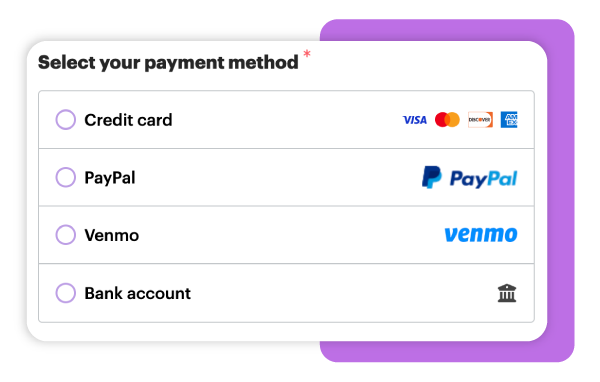
DonorPerfect offers multiple ways for donors to give. Secure online forms process credit cards, ACH bank transfers, and recurring donations in one place—giving donors flexible payment options while keeping every transaction automatically connected to donor records.
Many nonprofits evaluate donation processing as part of a broader donation software platform that supports campaign management, donor engagement, and reporting. They also use specialized online fundraiser tools to power campaigns such as giving days, peer-to-peer fundraising, and event-based donation drives.
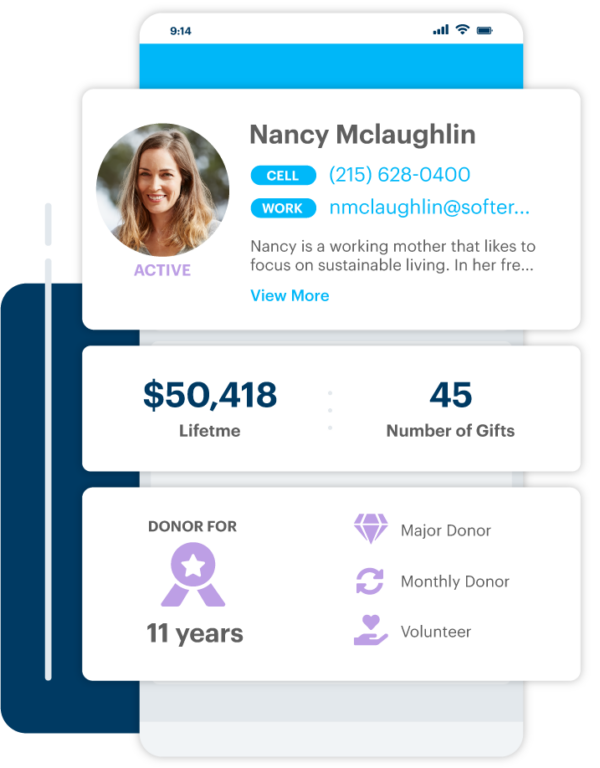
Donation systems increasingly integrate directly with a nonprofit CRM so that donations automatically update donor records, giving history, and campaign reports.
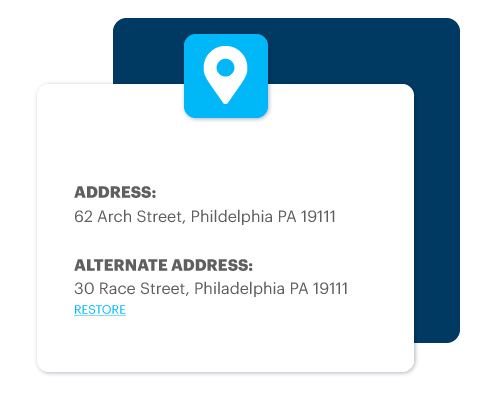
The DonorPerfect Address Updater helps keep donor records accurate by automatically identifying and updating mailing address changes. Cleaner data means fewer returned mailings, better reporting, and more reliable donor communication.
Top 10 Donation Processors for Nonprofits
Many tools can process online donations, but they vary in functionality, pricing models, and integration options. Some platforms focus primarily on payment transactions, while others—such as DonorPerfect—combine donation processing with donor management, reporting, and fundraising tools in a single system.
Understanding these differences helps nonprofits choose technology that aligns with their fundraising strategy, technical resources, and data management needs. Below are ten commonly used platforms nonprofits evaluate when selecting donation processing or online fundraising technology.
1. DonorPerfect
DonorPerfect is a nonprofit CRM and fundraising system designed for organizations in the United States and Canada. It combines donation processing, donor management, reporting, and campaign tracking all in one—helping nonprofits avoid disconnected tools and manual data entry.
With DonorPerfect Payment Services, nonprofits can accept credit cards, ACH transfers, and digital wallets while supporting recurring giving and automated receipting. Because donations are connected, every transaction is automatically recorded in donor records and reflected in real-time reporting. Integrations with tools like Intuit QuickBooks Online ensure financial data remains accurate.
DonorPerfect supports both online and in-person fundraising. With tools like DP Mobile and card readers, staff can securely accept donations on the go using tap-to-pay, swipe, or manual entry—making it easy to capture gifts at events, in the field, or during face-to-face donor interactions.
It also prioritizes secure payment processing, with PCI-compliant infrastructure, encrypted transactions, and built-in fraud prevention measures to help protect donor data and reduce risk.
- Ideal for – Nonprofits that want donor management and donation processing in one platform
- Methods – Credit and debit cards, ACH bank transfers, Apple Pay, Google Pay, recurring donations
- Payouts – Transactions automatically sync with donor records and reporting tools
- Strengths – Integrated nonprofit CRM, customizable reporting, recurring gift management, automated receipting, nonprofit-focused support
- Limitation – Designed as a full fundraising platform rather than a standalone developer payment gateway
- Results – Clients report notable first-year growth
Key takeaway: DonorPerfect combines donor management, custom reporting, and donation processing in one system, helping nonprofits streamline fundraising operations and maintain accurate donor data.
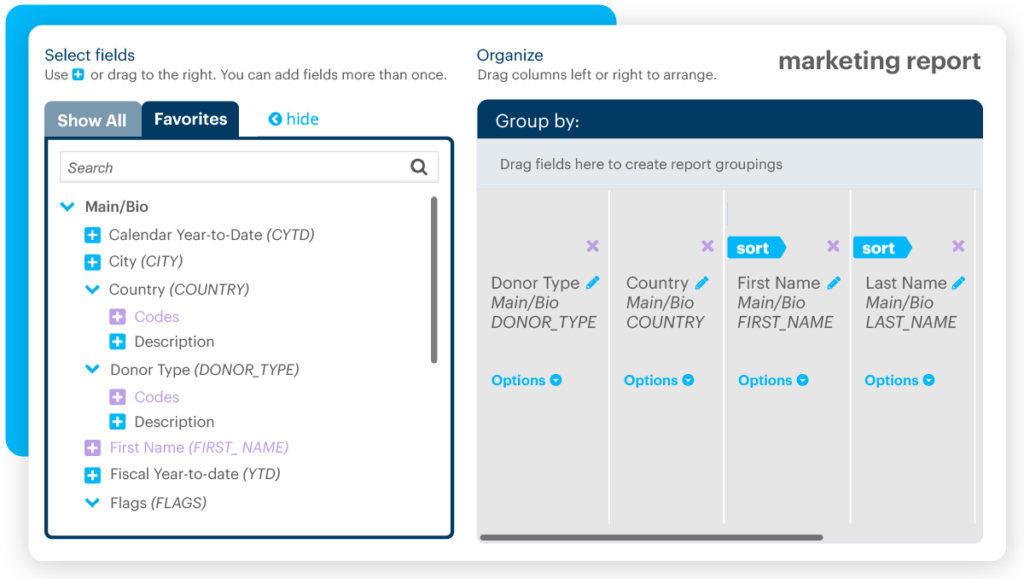
DonorPerfect’s reporting tools give nonprofits real-time visibility into fundraising performance. Track campaign results, monitor donor activity, and generate custom reports—all from one system—so your team can make informed decisions without exporting or reconciling data across platforms.
2. Stripe
Stripe is a global payment processor known for its developer-friendly APIs and flexible checkout tools, often used alongside fundraising platforms or nonprofit CRMs.
Stripe supports more than 100 payment methods, including credit cards, ACH, digital wallets, and international payment options. Stripe also offers automated payouts, fraud protection, and customizable payment experiences. Many nonprofits connect Stripe with a nonprofit CRM like DonorPerfect to streamline reconciliation and financial reporting, keeping donor data in sync with accounting and stewardship workflows.
- Ideal for – Organizations with technical resources that want a flexible payment infrastructure and custom integrations
- Methods – Credit and debit cards, ACH bank transfers, Apple Pay, Google Pay, and other global payment methods
- Pricing – Nonprofit discounts may be available, often around 2.2% + $0.30 per transaction
- Payouts – Automated payouts with timing that varies by country and risk profile
- Strengths – Flexible APIs, customizable checkout experiences, global payment support
- Limitation – Typically requires developer support or integration with fundraising software
Key takeaway: Stripe offers a highly flexible payment infrastructure and global payment support, making it a strong option for nonprofits with technical resources or custom fundraising platforms.
3. PayPal
PayPal is a widely recognized digital payment platform that many donors already trust and use, helping reduce friction in the donation process.
Nonprofits can accept donations through PayPal, credit cards, ACH, and Venmo, with donate buttons easily embedded across websites and campaigns. Verified nonprofits may receive discounted rates, with funds typically available quickly in a PayPal balance.
- Ideal for – Nonprofits that want a familiar payment option that many donors already use and trust
- Methods – PayPal accounts, credit and debit cards, ACH bank transfers, Venmo, digital wallets
- Pricing – Nonprofit rates may be available, often around 2.89% plus a fixed fee per transaction
- Payouts – Funds typically appear immediately in a PayPal balance; bank transfer timing may vary
- Strengths – Strong donor familiarity, quick setup, easy donation button deployment
- Limitation – Donor data and reporting depth may be more limited than CRM-integrated platforms
- Tip – Many nonprofits offer PayPal alongside credit cards and ACH to give donors additional payment choices
Key takeaway: PayPal provides a widely trusted payment option that is easy to deploy for online fundraising, though organizations may need additional tools for deeper donor data and reporting.
4. Square
Square provides online and in-person payment processing, making it a strong option for nonprofits running events or hybrid fundraising campaigns.
It supports credit cards, digital wallets, tap-to-pay, and QR codes, with the ability to set up payment links and checkout pages quickly. Funds are typically deposited within one to two business days.
- Ideal for – Nonprofits running hybrid fundraising campaigns, events, or onsite donation collection
- Methods – Credit and debit cards, Apple Pay, Google Pay, tap-to-pay terminals, payment links, QR codes
- Pricing – Flat-rate online pricing typically around 2.9% + $0.30 per transaction
- Payouts – Deposits typically arrive within one to two business days
- Strengths – Integrated payment hardware, easy setup for events, unified online and in-person processing
- Limitation – Fewer built-in donor management and CRM features than nonprofit fundraising platforms
- Example – QR codes at event tables or mobile payment links for quick onsite donations
Key takeaway: Square combines payment hardware and software to help nonprofits accept donations easily during events, pop-ups, and hybrid fundraising campaigns.
5. Donorbox
Donorbox is an online donation platform designed for quick campaign launches using embeddable forms and hosted donation pages.
It supports credit cards, ACH, recurring giving, and multi-currency donations, with payout timing based on the connected payment processor.
- Ideal for – Smaller nonprofits that want to launch online donation campaigns quickly
- Methods – Credit and debit cards, ACH bank transfers, digital wallets, multi-currency donations
- Pricing – Platform fee is often around 2.95% plus payment processor transaction fees
- Payouts – Typically two to three business days, depending on the connected payment processor
- Strengths – Embeddable donation forms, recurring giving tools, donor self-service portal
- Limitation – Additional platform fees on top of payment processor costs
- Best use – Launching monthly giving programs or campaign-specific donation pages
Key takeaway: Donorbox helps nonprofits launch online donation campaigns quickly with embeddable forms and recurring giving tools, though platform fees are typically added on top of payment processing costs.
6. Classy
Classy is a fundraising platform built for nonprofits managing peer-to-peer campaigns, events, and recurring donation programs.
It supports credit cards, ACH, and digital wallets, and integrates with leading CRMs to centralize donor data for stewardship and finance.
- Ideal for – Nonprofits scaling peer-to-peer fundraising campaigns and large events
- Methods – Credit and debit cards, ACH bank transfers, digital wallets (availability varies by region)
- Pricing – Platform fees plus payment processing fees
- Payouts – Standard platform disbursement timelines
- Strengths – Peer-to-peer fundraising tools, event fundraising features, and branded campaign pages
- Limitation – Total cost of ownership may increase as campaigns and fundraising volume grow
- Fit – Organizations running multi-channel fundraising campaigns at scale
Key takeaway: Classy provides comprehensive campaign management tools for nonprofits expanding peer-to-peer fundraising and multi-channel online campaigns.
7. GalaBid
GalaBid is a fundraising platform designed for auctions, galas, and event-based campaigns, offering tools for ticketing, mobile bidding, and real-time dashboards.
It uses a tipping model instead of a platform fee, meaning nonprofits typically pay only processing costs through a provider like Stripe, while donors can optionally cover platform costs.
- Ideal for – Auctions and gala-style events
- Methods – Processor-backed (e.g., Stripe)
- Pricing – Tipping model + processor fees
- Payouts – Per connected processor
- Strengths – Ticketing, mobile bidding, dashboards
- Limitation – Reliant on donor tips
- Advantage – Higher net proceeds for large events
Key takeaway: GalaBid’s tip-based pricing and event-focused tools help maximize net proceeds for auction-heavy fundraisers.
8. Helcim
Helcim is a payment processor focused on transparent pricing and reliable payment infrastructure for credit card and ACH transactions.
It uses an interchange-plus pricing model, allowing nonprofits to pay the card network rate plus a clear markup, often reducing costs at higher volumes. Helcim also offers no monthly fees and same- or next-day funding.
- Ideal for – Mid-sized nonprofits prioritizing processing cost efficiency
- Methods – Credit cards, ACH bank transfers
- Pricing – Interchange-plus markup
- Payouts – Same- or next-day options
- Strengths – Transparent pricing, no monthly fee, savings at scale
- Limitation – Limited built-in fundraising features
- Fit – Organizations prioritizing cost transparency and processing efficiency
Key takeaway: Helcim’s interchange-plus pricing offers transparent, potentially lower-cost payment processing for nonprofits focused on minimizing transaction expenses.
9. Snowball Fundraising
Snowball Fundraising is a mobile-focused donation platform designed for fast, event-driven giving experiences.
It supports text-to-give, mobile donation forms, tap-to-give, and recurring donations, making it well-suited for nonprofits running events or campaigns that rely on quick, mobile-first contributions.
- Ideal for – Event-driven nonprofits with mobile-focused fundraising
- Methods – Credit cards, mobile wallets, text-to-give
- Pricing – Platform tiers + processor fees
- Payouts – Standard platform timelines
- Strengths – Fast donation flows, easy setup, strong mobile tools
- Limitation – Limited advanced customization options
- Advantage – Optimized for quick donations during live events
- Best use – Galas, school drives, and event-based campaigns
Key takeaway: Snowball’s text-to-give and mobile-first design help nonprofits capture fast, impulse donations during events and campaigns.
10. Donately
Donately is an online donation platform focused on simple, embeddable forms that nonprofits can add directly to their websites.
It supports one-time and recurring donations with credit cards, ACH, and digital wallets, offering a streamlined setup for organizations looking to scale online giving without complex infrastructure.
- Ideal for – Lean teams expanding digital fundraising
- Methods – Credit cards, ACH, digital wallets
- Pricing – Platform fee + processor fees
- Payouts – Standard platform timelines
- Strengths – Simple embeddable forms, recurring donation support
- Limitation – Limited advanced peer-to-peer and event features
- Advantage – Quick deployment for always-on donation pages
Key takeaway: Donately provides a fast, customizable way for nonprofits to add recurring-ready donation forms to their websites and grow online giving.
We didn’t have one specific location to store all our donor information. It was all over the place. We wanted to find a central hub to host all that information. (That’s why) DonorPerfect has been really beneficial to us. It allows us to use our information in a smarter way. There’s so much it can do – and it’s exactly what we needed to take the next step to grow as a company. We’re lucky to have found it.”
– Caitlin Mahon, Bringing Hope Home
Each of these platforms offers a different mix of payment processing, fundraising tools, and integrations. The best choice depends on your organization’s fundraising strategy, technical resources, and donor experience goals.
Before making a decision, it’s important to understand the key factors nonprofits should evaluate when choosing donation processing software.
Pro tip: Model costs across three scenarios—a typical month, a major fundraising event, and year-end giving—to understand the true net revenue impact of each processor.
How to choose donation processing software for your nonprofit
Selecting donation processing software for nonprofits starts with five core criteria: total cost of ownership, payout speed, donor checkout experience, recurring gift support, and CRM/data integration for donor stewardship and financial reconciliation.
Compare platforms side-by-side and evaluate them against your primary fundraising use cases, such as ongoing campaigns, events, peer-to-peer drives, or recurring giving programs.
- Methods – Cards, ACH, digital wallets, QR codes, text-to-give; list the payment options your donors expect.
- Fees – Document platform fees, processor rates, fixed transaction costs, and donor-covered fee options.
- Payouts – Review funding timelines and payout schedules to understand when funds reach your organization.
- Recurring – Ensure the platform supports monthly or scheduled giving with tools that help donors update payment details easily.
- Data – Look for CRM integration, custom fields, and campaign tracking to capture donor and source information automatically.
- Reporting – Confirm the system supports finance exports and integrations with accounting tools such as QuickBooks.
- Security – Verify PCI compliance, encryption, tokenization, and fraud monitoring to protect donor payment information.
- Fit – Match the platform’s strengths to your core fundraising activities (events, peer-to-peer campaigns, or recurring giving).
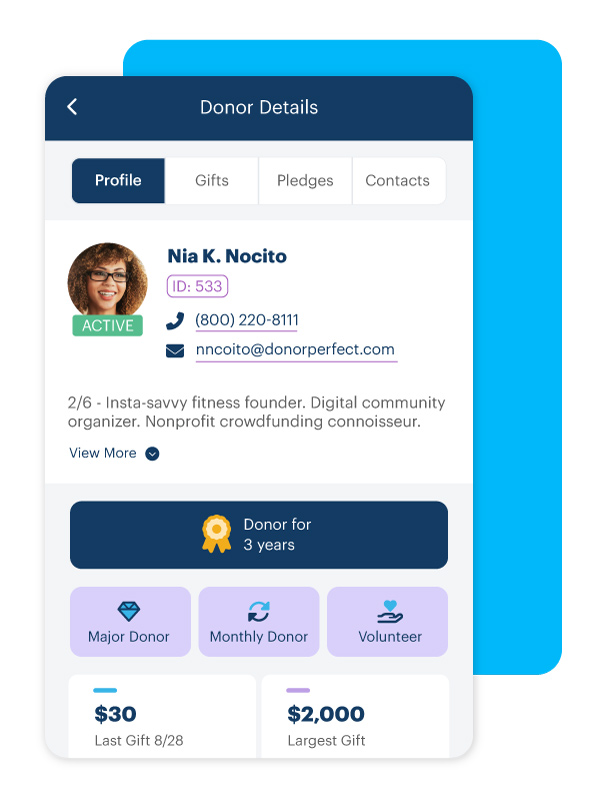
DonorPerfect’s comprehensive features all work together as one unified constituent database. Whether you’re generating solicitations, processing donations, tracking communications, or building relationships, your staff’s workflow will be faster and more productive with the ability to access the same real-time data for every task.
The right donation processor helps your nonprofit create a seamless giving experience while keeping donor data organized and accessible.
When payment processing connects directly with your donor management system, your team gains clearer insights into fundraising performance, donor engagement, and campaign results.
DonorPerfect brings donation processing, donor management, and reporting together in one platform designed specifically for nonprofits.
Request a free DonorPerfect demo to see how integrated donation processing can help your organization simplify fundraising and grow donor support.
Frequently Asked Questions
1. What payment methods should donation processors support?
2. How do nonprofits choose the best donation processing software?
3. What are typical nonprofit payment processing fees?
4. Why are recurring donations important for nonprofit fundraising?
5. How does donation processing integrate with donor management software?
6. What security features should nonprofits look for in a donation processor?