



Building a Donor Retention Plan for Deeper Connection and Lasting Impact
Contributed by fundraising consultant, coach, teacher, and writer T. Clay Buck
For most nonprofit organizations, a strong donor retention plan is the key to long-term growth and lasting impact. Sure, a one-time major gift can provide substantial and much-needed support that helps a program thrive. But if you’re thinking about fundraising from the standpoint of sustainability—and you should be—you need to prioritize cultivating ongoing connections with your donors.
This is especially true given the “connection economy” that we now live in. Where value was once measured in commodities and economic growth, it’s now defined by authentic human relationships and trust. And for those of us in the nonprofit sector, that has meant a shift from fundraising for the transaction to fundraising for transformation. In other words, we’re not just asking for gifts anymore. We’re building and sustaining meaningful, mission-aligned connections.
Remember: The gift is the starting point. It’s what happens after the gift—the deep, lasting connection—that matters most.
So, how do you keep your donor relationships thriving after the gift is made? Here, I’ll offer some hard truths about the traditional stewardship practices that might be holding you back, and I’ll walk you step-by-step through the basics of a successful donor retention plan.
Want more expert wisdom and donor retention tips from T. Clay Buck? Be sure to view the recording of his session at this year’s DonorPerfect Conference.
Understand donor retention fundamentals
Before you set up your plan, it’s important to understand the basics of donor retention—as a general rule, and for your own organization’s unique fundraising strategy. For most nonprofits, working to retain the committed donors already in your nonprofit CRM is a much more cost-effective strategy than recruiting new ones. It’s also likely to raise more money over time.
Crunch the numbers
First, check out what the data tells us about donor retention and repeat giving. Keep in mind that while these numbers indicate sector-wide trends, the data might look a little bit different for individual organizations.
Acquisition and solicitation cost more than retention.
About $1.20–1.50/solicitation vs. $0.20–0.25/existing donor
Existing donors retain at a higher rate than new ones.
About 69.2% for existing vs. 19.4% for new
Recurring donors (e.g, monthly, quarterly) retain at a high rate.
About 83%
Most donors who make a second gift continue to give.
About 59%
Repeat giving is a higher indicator of planned gift likelihood than gift size.
Evaluate your retention strategy (or lack of one)
With those numbers in mind, take a close look at your current donor retention strategy and identify areas for growth. (If a defined retention strategy doesn’t exist, that’s a good place to start!)
Ask yourself the following questions:
- Do you communicate to donors the expectation that they give year over year?
- When you acquire and solicit new donors, do you have retention in mind?
- How comprehensive and accurate is your retention tracking? (e.g., Do you account for household giving and soft credits?)
- What are your metrics for successful retention? (e.g., Do you only look for year-to-year giving, or do you include consistent but non-consecutive gifts?)
- What are you doing to re-engage lapsed donors?
- Are you targeting the right people? (I’m sorry to say it, but it’s just true: some donors just aren’t that into you.)
Your lapsed donors are still your donors.
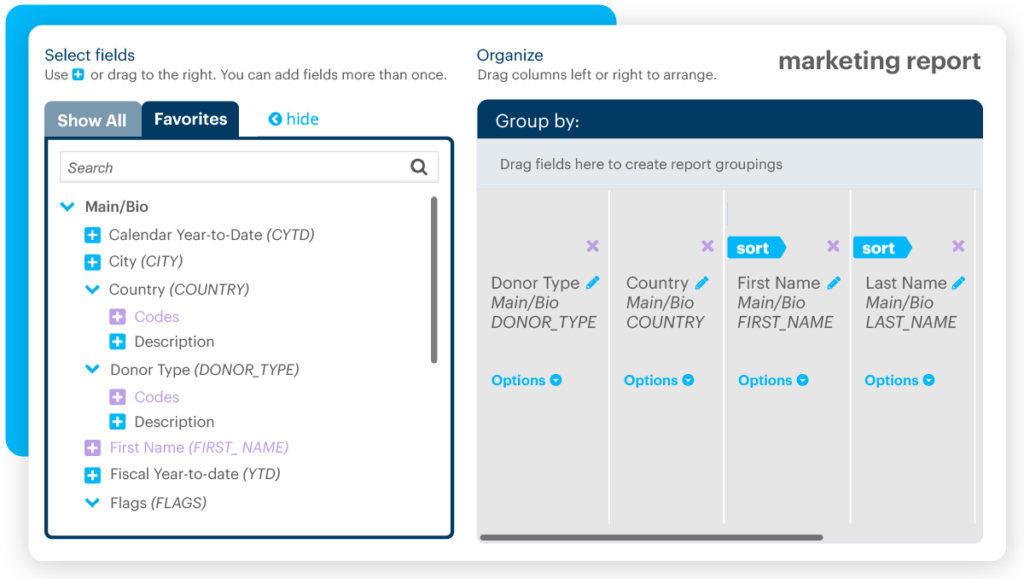
They might just be waiting for you to reach out. With DonorPerfect’s Easy Report Builder and custom filtering, discover lapsed donors with ease. Run LYBUNT and SYBUNT reports to identify supporters who have given in previous years, and make an outreach plan to update them on the impact of their gift and re-engage them in your mission.
Now that you have a clear sense of the retention landscape at your nonprofit organization, let’s talk about donor stewardship: what you think you know, and what you might consider reframing.
Redefine donor stewardship
I’m going to start with a bold statement: we’ve been approaching stewardship all wrong. In fact, we’ve forgotten what stewardship really means. In order to design a donor retention model that builds deep donor connection and trust, we need to redefine what, why, and how we steward in our nonprofit fundraising.
Steward gifts, not donors
If you look it up in the dictionary, you’ll find stewardship defined as “the careful and responsible management of something entrusted to one’s care.” That’s something, not someone.
When a donor gives, they are entrusting you with the care of their gift. It is an act of deep trust, and your responsibility as the fundraiser is to ensure their gift is used as intended and to clearly communicate the impact it has on your mission.
If you want to better steward your donors, you need to steward their gifts first.
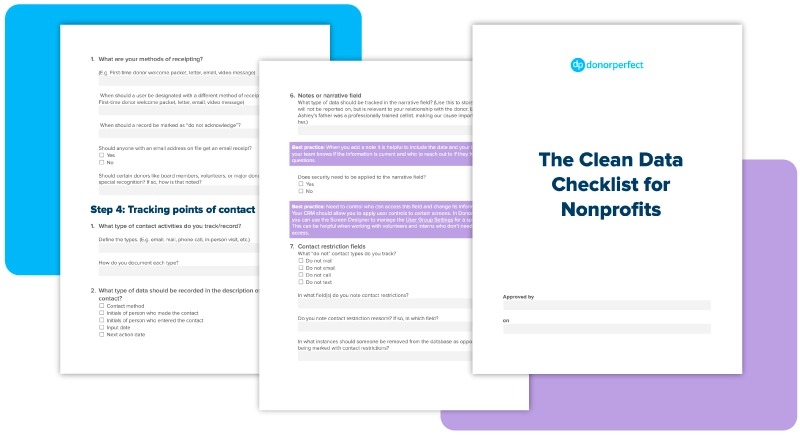
Responsible gift stewardship includes proper and consistent data entry. Are all of your gifts and solicitation codes entered correctly? Download The Clean Data Checklist and make sure your nonprofit CRM is up to date.
Understand the science of stewardship
To move beyond a transaction-based approach to donor stewardship, you also need to understand the science behind charitable giving. People give because they want to forward your mission; they also give because doing good feels good.
When a donor makes a gift, they experience a surge of serotonin, the feel-good chemical in our brains that regulates our moods and emotions. Even after that excited feeling has gradually subsided, there is still an emotional residue that connects the donor—and their sense of identity—to the gift.
Meaningful stewardship is about reciprocity: how you respond to a donor should reflect that sense of identity and provide positive emotional reinforcement.
You can reinforce that emotional connection by:
- Following up authentically, not transactionally
- Reminding donors of the impact they provide, not just what you need
- Timing your fundraising communications to align with their emotional peaks
The truth is that generosity fades over time, and reminding a donor of the feeling of a gift reaffirms their identity as a generous person and deepens their emotional identification with your mission.
Upgrade your outreach strategy
Now, let’s talk about donor outreach. You can’t build an emotional connection with a donor if you aren’t communicating with them the way they want or need.
You should be aware of each donor’s individual preferences, but there are three things all donors expect:
- Prompt, personalized, and meaningful gift acknowledgement
- Transparency around the use and impact of their gift
- Consistent follow-up and engagement
Streamline your fundraising communications at every stage of the donor lifecycle.
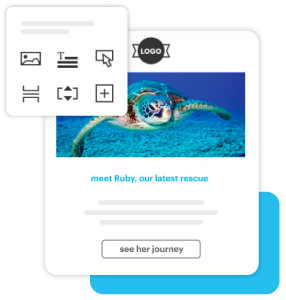
Every DonorPerfect system comes with a Constant Contact account, giving you the email and digital marketing tools you need to keep your donors connected and engaged. Design branded templates, segment for targeted outreach, and track email analytics—all synced directly to your nonprofit CRM.
While digital channels are great for personalized acknowledgement and follow-up, don’t underestimate the power of direct mail. Direct mail isn’t dead—it still has the highest response rates and actually boosts donors’ online engagement. Your digital and print outreach efforts should work hand in hand.
Pro tip: Don’t confuse channel of action with channel of inspiration. The way a donor gives is not necessarily what prompted them to give in the first place.
Finally, you may not need to wait as long as you think to make that second ask. In fact, the likelihood of a second gift is highest within the three months after a donor gives. But you cannot simply send a thank-you, wait two months, and then email them again out of the blue. Steward them with consistent updates and opportunities for engagement, so they’re still emotionally connected to the mission when the time comes.
Craft a donor retention plan
Let’s get down to work. Whether you’re refining an existing donor retention plan or developing a new one, here are my step-by-step suggestions for long-term success.
- Set your goals
- Define your objective (e.g., engagement, renewal, upgrade).
- Determine your metrics (e.g., renewal rate, engagement actions, upgrades vs. downgrades).
- Establish your infrastructure
- Determine bandwidth and necessary resource allocation.
- Assign personnel specific roles and responsibilities.
- Get your tools in place (e.g., nonprofit CRM, digital communications, storytelling).
- Design your donation forms
- Make them visually appealing and frictionless to navigate.
- Keep them focused and urgent, with one specific ask.
- Steward before the gift is made, using language that communicates gratitude and impact.
- Segment your donors
- Segment by loyalty and affinity, not just giving capacity.
- Use your nonprofit CRM to identify key donor types: first-time, renewing, repeat (loyal), and major donors
- Adapt your messaging accordingly for each segment.
- Plan your immediate response
- Prioritize a heartfelt, personalized acknowledgement over an automated gift receipt (for now, the receipt can wait!)
- Tell the donor exactly how their gift will be used
- Set an alert to follow up within 1-2 months with an opportunity for engagement (e.g., volunteering, site visit, cultivation event)
Pro tip: Use your nonprofit CRM’s built-in alerts to inform you as soon as a gift has been made and prompt the appropriate staff member to follow up.
DonorPerfect client? Learn how to set up thank-you reminders so you never miss a gift acknowledgement.
Don’t have DonorPerfect? Request a demo to learn more about how DonorPerfect’s automations and alerts can streamline your nonprofit fundraising operations.
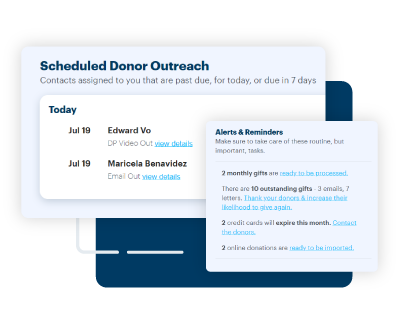
There are plenty of ways you can approach your post-gift action plan—but there are a few things every plan absolutely must do.
Your post-gift checklist:
- Acknowledge receipt of the gift
- Send a receipt with tax deductibility information
- Say thank you
- Report on how the gift is used
Sustain multichannel donor engagement
After you’ve acknowledged the gift, how will you keep the donor engaged and connected to your organization? As I emphasized at the beginning, it’s what happens after the gift that really counts when we’re talking about donor retention.
You have many options for donor engagement—here are just a few ideas:
- Digital newsletter
- Printed impact report
- Video thank-you
- Handwritten holiday or birthday card
- Donor survey
- Volunteer opportunities
- Fundraising event
However you choose to engage your donors, you need to keep in mind two things. First, your donors deserve access and information beyond what you offer the general public. A public social media post or general newsletter might help your donors feel connected to what’s going on at your organization, but they are not stewardship.
Second, every donor touchpoint needs to focus on the specific mission impact their gift has made possible. As the fundraiser, your primary responsibilities to the donor are to steward their gift and to reflect back to them the identity they brought forward when they gave—someone generous, caring, and compassionate. When your donor communications are consistent, personalized, and focused on transformation, you build deeper donor connections that last.
Your most valuable and sustainable prospects are the donors who have already given to your organization. With clean data and the help of your nonprofit CRM, you can identify your loyal supporters and understand who they are as people, allowing you to build a donor retention plan tailored to their values and motivations.
Your Data-Driven Donor Persona Checklist gives you the tools to personalize every touchpoint. Learn how to segment key donor groups, gain quantitative and qualitative insights, and develop donor personas that align with your nonprofit’s unique goals.